
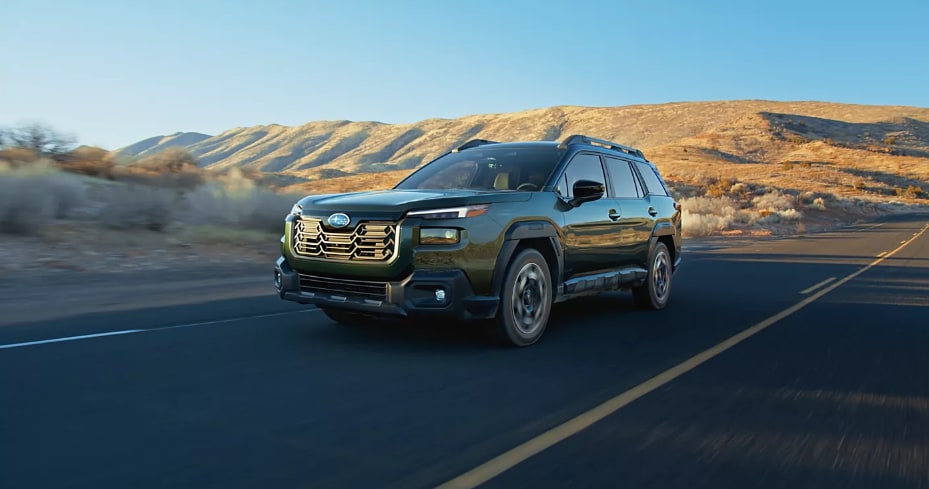
Montana isn't forgiving to the unprepared driver. The state demands more from your vehicle than most places you'll ever visit. One moment you're cruising prairie backroads under endless sky, and 30 minutes later you're climbing switchbacks into alpine country where weather can shift without warning. This reality shapes what works on Subaru Outback Montana road trips and what doesn't.
The Outback earned its reputation in places like Montana through decades of proving itself on roads that test every component. It handles the specific challenges of Big Sky Country better than most vehicles in its class, not through flashy features but through thoughtful engineering matched to real-world conditions. Understanding why this vehicle succeeds here helps you make better decisions about what to drive and where to explore. If you're ready to explore our current Outback inventory, we at Great Falls Subaru can show you how these capabilities translate to your specific Montana driving needs.
What Makes Montana Roads Different from Anywhere Else
Montana's 147,000 square miles contain some of the most dramatic geographical shifts you'll encounter anywhere. The landscape doesn't transition gradually. It transforms. With 80% of Montana's daily vehicle miles traveled occurring on rural roads, understanding these conditions becomes essential for any serious road trip planning.
Terrain That Shifts from Prairie to Alpine in a Single Drive
Drive from Great Falls toward Glacier National Park and you'll experience this firsthand. The rolling prairies of central Montana give way to foothill country, which then erupts into the jagged peaks of the Rocky Mountain Front. This transition happens within a single afternoon's drive, but it represents an entirely different set of road conditions and vehicle demands.
The eastern plains feature long, straight highways where you might see three other vehicles in an hour. These roads stretch unbroken across grasslands, testing your patience and your fuel tank's capacity equally. Western Montana presents the opposite challenge. Mountain passes wind through valleys and climb over Continental Divide crossings where grades reach up to 10% in mountainous terrain, compared to 5% on level terrain and 7% on rolling roads.
This diversity creates unique requirements for Montana road and travel. Your vehicle needs highway cruising capability for those endless straight sections, but it also needs the handling and power to navigate mountain grades confidently. The Outback balances both needs without compromising either.
Weather, Distance, and the Reality of Remote Stretches
Montana weather operates on its own schedule. Summer mornings can start clear and warm, then shift to afternoon thunderstorms that turn dirt roads into mud tracks. Spring and fall bring unpredictable snow that appears and disappears within days. Winter transforms even major highways into challenging drives requiring real traction and ground clearance.
Distance compounds every challenge. Services cluster around towns, but those towns spread far apart. Between Great Falls and Missoula, you'll cover 165 miles with limited fuel stops. Head east from Billings toward Miles City and you're looking at 145 miles of sparse population. Cell coverage remains spotty across much of the state, making mechanical reliability and vehicle capability essential rather than optional.
Remote stretches dominate Montana's road network. Many scenic routes take you hours from the nearest service station or repair shop. This isolation means your vehicle choice directly impacts your safety and enjoyment. Breaking down 80 miles from town on a winter evening isn't an adventure you want to experience.
How Symmetrical All-Wheel Drive Builds Confidence Across Montana
The Outback's Symmetrical All-Wheel Drive system, standard across all trims, becomes immediately relevant on Montana roads. This isn't marketing language. It's engineering that addresses specific traction challenges Montana drivers face regularly.
Most all-wheel drive systems power the front wheels primarily and engage rear wheels when slip occurs. Subaru's approach differs fundamentally. Power splits between front and rear axles continuously, with weight distributed evenly across the drivetrain. This balanced layout creates predictable handling characteristics that matter most when conditions deteriorate.
Real-World Traction on Snow, Gravel, and Wet Mountain Roads
Gravel roads form Montana's secondary network. Forest Service roads, access routes to trailheads, and countless county roads use gravel surfaces ranging from well-maintained to barely passable. Rural road widths typically span 24 feet minimum, expanding to 38-44 feet in wider sections, but surface conditions vary dramatically. The Outback's AWD prevents the fishtailing and loss of control that plague two-wheel drive vehicles on loose surfaces.
Snow creates different challenges entirely. Montana winters bring everything from light dustings to heavy accumulations that linger for months at higher elevations. The Outback maintains traction through snow-covered curves and on icy patches where other vehicles struggle.
Wet mountain roads during summer storms reveal another advantage. Rain on rock faces creates runoff that streams across pavement, making mountain highways temporarily treacherous. The AWD system transfers power to wheels with grip, maintaining forward progress and control when two-wheel drive vehicles lose purchase.
This confidence matters psychologically as much as mechanically. When you're driving through Montana's remote areas, knowing your vehicle will handle whatever the road presents reduces stress and lets you focus on the scenery rather than worrying about traction. Our team can schedule pre-trip maintenance to ensure your AWD system performs optimally before your journey.
Ground Clearance That Opens Up More of Big Sky Country
The Outback provides 8.7 inches of ground clearance, positioning it between typical sedans and full-size SUVs. This measurement transforms what you can access during a Montana road trip.
Paved highways reach Montana's famous destinations, but the state's most memorable experiences often require leaving pavement behind. Forest Service roads leading to trailheads, fishing access sites along remote streams, and scenic overlooks off main routes frequently involve rough, uneven surfaces. The Outback's clearance prevents scraping on rocks, bottoming out on ruts, and damage from high-centered situations that stop lower vehicles.
This capability expands your itinerary options considerably. You're not limited to tourist corridors and major highways. Secondary roads become viable choices, opening territory that sees a fraction of the traffic. The ability to explore these routes confidently changes the character of your trip from following the crowd to discovering spaces most visitors miss.
Ground clearance also provides peace of mind during spring runoff season. Montana's snowmelt creates rushing water that crosses roads at fords and low-water crossings. The Outback's height keeps critical components above water level on crossings that would flood the air intakes and electrical systems of lower vehicles.
Long-Drive Comfort for Montana's Wide-Open Distances
Seat Comfort and Cabin Environment
Montana road trip itineraries involve serious miles. Glacier National Park to Yellowstone spans 390 miles. Great Falls to the northeast corner near Medicine Lake covers 430 miles. These aren't quick day trips. They're extended drives requiring vehicles that don't punish passengers over distance.
The Outback addresses long-distance comfort through multiple smart design choices. Seats provide substantial bolstering and support without feeling confining. The suspension absorbs road imperfections while maintaining stable handling. Cabin noise remains subdued even at highway speeds, reducing the fatigue that comes from hours of wind and road noise.
Controls, Visibility, and Climate
Ergonomics matter increasingly as hours accumulate. Controls fall naturally to hand without requiring awkward reaches. Visibility exceeds most vehicles in this segment, with large windows and thin pillars that reduce blind spots. This visibility decreases the constant micro-adjustments and tension that come from limited sightlines.
Climate control becomes essential because temperature swings happen quickly. Morning starts might require heat, afternoon sun demands air conditioning, and evening returns to cool temperatures again. The Outback's dual-zone automatic climate control maintains comfortable conditions without constant manual adjustment.
These comfort factors might seem minor individually, but they compound over hundreds of miles. Arriving at your destination feeling fresh rather than exhausted transforms the experience completely.
Cargo Flexibility Built for Montana Adventures
Montana adventures demand equipment. Hiking requires boots, layers, water, and safety gear. Fishing adds rods, tackle, waders, and coolers. Photography means cameras, lenses, and tripods. Winter activities multiply the gear requirements exponentially.
The Outback's cargo area provides up to 80.5 cubic feet with seats folded, accommodating the variable gear loads that characterize Montana road trips without forcing you to choose between passengers and equipment. If you're considering certified pre-owned Outback options, cargo capacity remains consistent across model years.
Packing for Variable Weather and Outdoor Pursuits
Weather variability requires carrying multiple clothing layers regardless of the season. Summer trips need rain gear and warm layers for high elevations. Spring and fall demand heavier winter clothing as backup. Winter travel requires extensive emergency equipment, including blankets, food, water, and recovery tools.
The Outback's flexible cargo space handles this reality without forcing compromises. You can pack comprehensively for changing conditions while still maintaining passenger comfort. Cargo organization features include tie-down points, underfloor storage, and a power liftgate that simplifies loading and unloading. The wide opening and low load floor make accessing gear straightforward rather than requiring contortions to reach items in back corners.
Roof rails expand carrying capacity for bulky items like kayaks, bikes, or cargo boxes. This vertical space utilization keeps the cabin available for passengers and valuable items while moving larger equipment topside.
Fuel Efficiency That Makes Sense Across Montana Miles
Fuel efficiency becomes critical when gas stations appear sporadically. The Outback delivers 27 mpg combined with the 2.5L engine and 24 mpg combined with the turbocharged option, providing range that matches Montana's geography.
These numbers translate to substantial highway range on a single tank, covering Great Falls to Missoula and back with fuel to spare. It reaches from Billings to the North Dakota border. It provides the buffer you need when planning routes through areas where services spread thin.
Efficiency matters economically too. A typical Montana itinerary covers 1,000-2,000 miles, depending on the routes chosen. Fuel costs represent a significant portion of total trip expenses. The Outback's efficiency compared to larger SUVs saves hundreds of dollars over a week-long trip while delivering similar capability.
Comparing Outback Trims for Montana Driving
| Trim | AWD System | Ground Clearance | Cargo (behind rear seats) | Fuel Economy (combined) | Key Safety Features |
|---|---|---|---|---|---|
| Premium | Symmetrical AWD | 8.7 in. | 34.6 cu. ft. | 27 mpg | EyeSight, Blind-Spot Warning, Reverse Auto Braking |
| Limited | Symmetrical AWD | 8.7 in. | 34.6 cu. ft. | 27 mpg | EyeSight, Blind-Spot Warning, Reverse Auto Braking, Rear Cross-Traffic Alert |
| Touring | Symmetrical AWD | 8.7 in. | 34.6 cu. ft. | 27 mpg | EyeSight, Blind-Spot Warning, Reverse Auto Braking, DriverFocus, Hands-Free Assist |
| Limited XT | Symmetrical AWD | 8.7 in. | 34.6 cu. ft. | 24 mpg | EyeSight, Blind-Spot Warning, Reverse Auto Braking, Surround View Monitor |
| Touring XT | Symmetrical AWD | 8.7 in. | 34.6 cu. ft. | 24 mpg | EyeSight, Blind-Spot Warning, Reverse Auto Braking, DriverFocus, Surround View Monitor, Hands-Free Assist |
| Wilderness | Symmetrical AWD | 9.5 in. | 34.6 cu. ft. | 23 mpg | EyeSight, Blind-Spot Warning, Reverse Auto Braking, Dual X-MODE |
All Outback trims deliver the same cargo capacity and standard Symmetrical AWD. Turbocharged XT and Wilderness models trade some fuel economy for increased power on mountain grades, while the Wilderness adds 9.5 inches of ground clearance and dual X-MODE for deeper off-road capability.
Montana Road Trip Routes Where the Outback Shines
Certain routes showcase the Outback's capabilities better than others. These aren't just scenic drives. They're roads that challenge vehicles and reward drivers who come prepared.
Glacier National Park and Going-to-the-Sun Road
Going-to-the-Sun Road represents Montana's most famous drive and one of its most demanding. This approximately 50-mile route crosses the Continental Divide at Logan Pass, climbing through landscapes that shift from dense forest to alpine tundra.
The road itself demands attention. Narrow lanes hug cliff faces with minimal guardrails. Switchbacks tighten considerably near Logan Pass. Traffic moves slowly, with stops frequent for wildlife viewing and photo opportunities. The Outback's maneuverability and visibility excel in these conditions where larger vehicles struggle.
Elevation changes throughout the drive create temperature swings requiring adaptability. Morning starts at lake level might be warm, but Logan Pass at 6,646 feet often remains cold even in July. The Outback's climate control handles these transitions smoothly while AWD provides traction if you encounter snow at higher elevations.
Paradise Valley to Yellowstone's Northern Entrance
The drive from Livingston through Paradise Valley to Yellowstone's northern entrance at Gardiner showcases Montana's ranch country against the backdrop of the Absaroka Mountains. Highway 89 follows the Yellowstone River through this valley, providing constant scenery and good road conditions.
This route exemplifies the kind of drive where the Outback's balanced capabilities shine. Pavement stays smooth, allowing comfortable cruising, but numerous side roads access fishing spots and hiking trails. The AWD and clearance let you explore these secondary routes confidently.
The weather along this corridor changes rapidly. Morning clouds can give way to afternoon thunderstorms that arrive with little warning. The Outback's traction handles wet pavement competently while the cabin keeps occupants comfortable regardless of conditions outside.
Beartooth Highway and Eastern Montana Exploration
Beartooth Highway (U.S. Route 212) climbs to 10,947 feet at Beartooth Pass, making it one of the highest paved roads in the northern Rockies. This route challenges vehicles with sustained grades, sharp curves, and thin air that affects engine performance.
The Outback handles these challenges better than you might expect. The continuously variable transmission maintains optimal engine speed during climbs without hunting for gears. AWD provides traction on curves where vehicles relying on front-wheel drive alone feel less stable.
Eastern Montana receives less tourist attention but offers compelling drives across prairie landscapes toward the Badlands. These routes test vehicle reliability more than capability because distances stretch long between services. The Outback's dependability and fuel efficiency suit these explorations perfectly.
Planning Your Montana Road Trip in the Subaru Outback
Successful trip planning begins with understanding the state's scale and seasonal variations. Summer provides the most accessible conditions, but it also brings crowds to popular areas. Spring and fall offer solitude and dramatic weather but require more careful preparation. Winter limits access to many routes while transforming others into entirely different experiences.
Route Planning and Timing
Start by mapping distances realistically. Montana requires patience. Trying to see everything in a week leaves you exhausted and missing the point. Better to choose one or two regions and explore them thoroughly than rushing across the entire state checking boxes.
Build flexibility into your schedule. Weather might close passes or make certain routes inadvisable. Having backup plans and extra days lets you adapt without stress. The Outback's capabilities expand your options, but they don't eliminate the need for good judgment about conditions.
Vehicle Preparation and Emergency Supplies
Pack comprehensively for variable weather and outdoor pursuits. Even July trips should include warm layers and rain gear. Emergency supplies become essential when you're hours from help on remote routes. Water, food, first aid, basic tools, and recovery equipment belong in every Montana road trip, regardless of season.
Service your Outback before departure, particularly if you're traveling from out of state. Montana's distances and conditions stress vehicles more than typical driving. Fresh oil, good tires, and proper fluid levels prevent problems that ruin trips.
Connect With Us Before Your Journey
If you have questions about preparing your Outback for Montana conditions or want to discuss which trim best suits your adventure plans, reach out to our team at Great Falls Subaru. We're located at 800 Central Ave in Great Falls, positioning us perfectly as a basecamp for exploring both Glacier National Park to the west and the expansive prairies to the east.
Montana rewards vehicles that match its demands. The Outback's combination of Symmetrical All-Wheel Drive, 8.7 inches of ground clearance, comfort, cargo space, and efficiency addresses the specific challenges this state presents. These capabilities transform potential obstacles into manageable situations, letting you focus on the experience rather than worrying about your vehicle's limitations. The result is the kind of Subaru Outback Montana road trips where the journey matters as much as the destination.
Categories:
New Inventory