
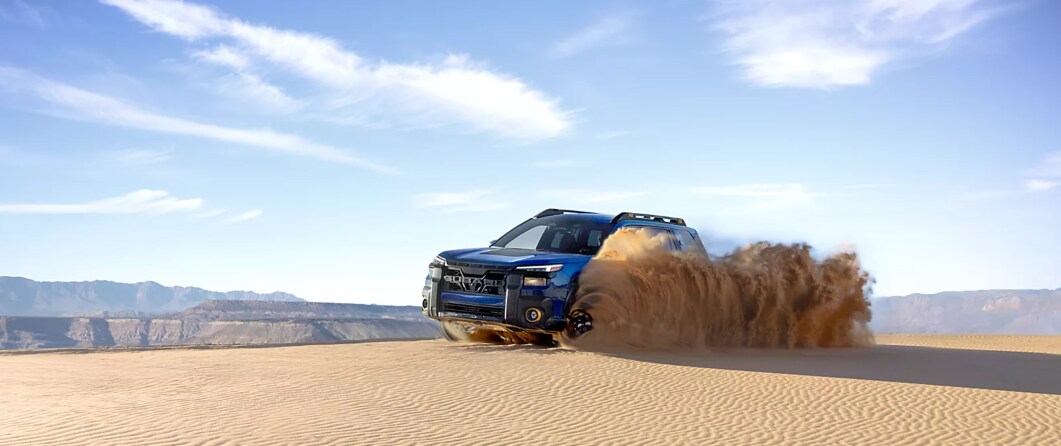
If you've been shopping for a new Subaru and keep seeing the Wilderness badge pop up across multiple models, you're probably wondering whether it actually means something or whether it's just clever marketing. Short answer: it's real. The Subaru Wilderness is a trim level within existing model lines, not a separate vehicle, and it reflects a deliberate engineering direction built around expanded off-road capability.
Understanding what separates Wilderness trims from standard configurations helps you figure out whether that extra capability matches how you actually drive in Montana. If you're already leaning toward one, you can browse our current Wilderness inventory to see what's available now.
What Sets the Subaru Wilderness Trim Apart From Standard Models
The Wilderness lineup exists because Subaru recognized that a significant portion of its buyers wanted more off-road capability without crossing into full truck territory. Standard Subaru trims already perform well off pavement, thanks to Symmetrical AWD and capable suspensions. The Wilderness trim takes those foundations and pushes them further with specific hardware changes, not just a styling package.
Every engineering decision in the Wilderness trim, from ride height to tire specification to interior materials, is made with outdoor use in mind. The exterior takes on a more aggressive stance with bold body cladding and unique styling details that signal off-road intent. But the changes run deep into how the vehicle rides, handles rough terrain, and protects its undercarriage from damage.
Worth noting: the Wilderness trim doesn't sacrifice daily drivability. Subaru engineers these vehicles to perform just as well on a paved commute through Great Falls as they do on a Forest Service road during hunting season. That balance between rugged capability and everyday practicality is exactly what makes the Wilderness vs. standard comparison worth taking seriously. Standard trims are genuinely well-suited for daily driving, highway commutes, and buyers who prioritize premium interior finishes. The Wilderness is simply optimized for different priorities.
Core Capability Upgrades Found Across Every Wilderness Model
Across every Wilderness model, Subaru applies a consistent set of upgrades that define what the trim actually delivers. These aren't isolated changes; they work together as a system designed to expand where you can go and how confidently you can get there.
Raised Ground Clearance and Retuned Suspension
Every Wilderness model rides higher than its standard counterpart. Ground clearance reaches 9.5 inches on the Outback Wilderness and 9.3 inches on both the Forester and Crosstrek Wilderness models, compared to 8.7 inches on standard trims. That extra height improves approach and departure angles, making it easier to clear rocks, ruts, and uneven ground without scraping the undercarriage on Montana's rougher Forest Service roads or rocky river access points.
The suspension isn't just lifted; it's retuned. Subaru adjusts spring rates and damper tuning to support both the increased ride height and the demands of genuine off-road use. The result is a vehicle that stays composed over rough terrain without becoming punishing on paved roads. For drivers who regularly deal with gravel roads, washed-out surfaces, and winter frost heaves, that suspension calibration makes a tangible difference day to day.
All-Terrain Tires, Skid Plates, and X-MODE® Enhancements
Wilderness models come standard with all-terrain tires built for traction in conditions that would challenge standard highway rubber. Whether you're navigating loose gravel, wet grass, spring mud, or packed snow, the tread pattern and tire compound are designed to hold. Skid plates protect critical components underneath the vehicle, including the engine, fuel tank, and transfer case, from the rocks and debris that come with off-road driving.
The X-MODE® system, available on many standard Subaru models in a single-function configuration, gets a meaningful upgrade in Wilderness trims. Dual-function X-MODE® offers two settings: one optimized for snow and dirt, another for deep snow and mud.
The system manages engine output, throttle response, and torque distribution to maximize traction in conditions where a standard vehicle would struggle. On a mountain pass in January or a muddy two-track in April, that additional mode is not a gimmick.
2026 Outback Wilderness vs. Standard Outback: A Closer Look
The Outback is Subaru's most recognized nameplate, and the gap between the standard and Wilderness versions is substantial. The most distinctive difference here is the powertrain. The Outback Wilderness comes equipped with a turbocharged 2.4L BOXER® engine producing 260 horsepower and 277 lb-ft of torque. The standard Outback runs a naturally aspirated 2.5L engine rated at 180 horsepower. That difference is felt on steep off-road climbs, when merging onto the highway with a loaded roof rack, and when passing on two-lane Montana roads with limited sight lines.
Towing capacity reflects that engine advantage directly. The Outback Wilderness is rated at 3,500 lbs, compared to 2,700 lbs for the standard Outback. That gap matters if you're pulling a small camper or a loaded utility trailer to a remote campsite. Bridgestone Dueler all-terrain tires and reinforced roof rails engineered to carry heavier loads come standard on the Outback Wilderness, not just presenting the appearance of capability. For buyers who want the Outback's versatility pushed to its practical limit, the Wilderness trim makes a strong case.
2026 Forester Wilderness vs. Standard Forester: A Closer Look
The Forester has always been a practical, all-weather SUV, and the Forester Wilderness builds on that reputation with upgrades that matter for Montana gear-haulers. The most striking number here is towing capacity. The standard Forester is rated at 1,500 lbs. The Forester Wilderness is rated at 3,500 lbs. That 2,000-lb jump opens up real options: a loaded utility trailer, a small camper, a personal watercraft headed to a reservoir access point.
Ground clearance rises to 9.3 inches from 8.7 inches on the standard trim, and the Forester Wilderness rides on Yokohama GEOLANDAR® all-terrain tires that perform well in mud, loose gravel, and snow. Dual-function X-MODE® comes standard. The Forester's upright profile and generous cargo area make it a natural fit for hunters and campers who need to pack efficiently. The Wilderness version gives that practical platform the underpinnings to actually reach the spots worth packing for.
2026 Crosstrek Wilderness vs. Standard Crosstrek: A Closer Look
The Crosstrek is Subaru's most compact SUV, and that size is actually a defining advantage in the Wilderness version. Where the Outback and Forester Wilderness are suited for larger loads and wider trails, the Crosstrek Wilderness excels on narrow, tight-access routes where a longer wheelbase becomes a liability. Think single-track forest roads, tight switchbacks, and access points where the terrain itself limits what you can bring.
The Crosstrek Wilderness comes with Yokohama GEOLANDAR® all-terrain tires, skid plates, and 9.3 inches of ground clearance, up from 8.7 inches on the standard trim. Towing capacity increases from 1,500 lbs to 3,500 lbs, the same 2,000-lb jump seen on the Forester Wilderness, and it makes it capable of pulling a small trailer or utility load when needed. All Wilderness models feature 17-inch matte black wheels, and the Crosstrek is no exception.
For buyers who want maximum off-road access in a smaller, more maneuverable package, the Crosstrek Wilderness covers ground that larger vehicles simply can't reach.
StarTex® Upholstery and the Interior Built for Montana Conditions
One detail that often gets overlooked in the Wilderness vs. standard comparison is the interior. Standard Subaru interiors are well-built and available with cloth or leather upholstery, depending on trim level. Wilderness models replace those options with StarTex® upholstery, a water-repellent synthetic material designed for people who don't leave their outdoor lives at the trailhead.
StarTex® resists water, dirt, and staining more effectively than standard cloth. It wipes clean without the effort that fabric seating requires, and it holds up over time without the cracking that some leather alternatives develop in extreme cold. For anyone driving through Montana winters, loading wet gear after a float trip, or climbing in after a morning in a duck blind, StarTex® is a genuinely practical upgrade. It makes the vehicle feel purpose-built rather than just capable-looking.
The honest trade-off is that Wilderness trims are configured around this functional interior direction. Buyers who prioritize premium leather seating or certain panoramic roof configurations may find those options unavailable on Wilderness trims. If interior luxury is the primary priority, a higher standard trim may serve that preference better. The Wilderness interior is built to hold up, not to impress at a glance.
Compare Wilderness and Standard Trims In-Person at Great Falls Subaru
Here's a side-by-side look at the key specs across Wilderness models and standard trims:
| Feature | Outback Wilderness | Forester Wilderness | Crosstrek Wilderness | Standard Trims |
|---|---|---|---|---|
| Ground Clearance | 9.5 in. | 9.3 in. | 9.3 in. | 8.7 in. |
| Tires | Bridgestone Dueler (AT) | Yokohama GEOLANDAR® (AT) | Yokohama GEOLANDAR® (AT) | All-season |
| X-MODE® | Dual-function | Dual-function | Dual-function | Standard |
| Towing Capacity | 3,500 lbs | 3,500 lbs | 3,500 lbs | 1,500–2,700 lbs |
| Upholstery | StarTex® | StarTex® | StarTex® | Cloth/Leather |
Who the Wilderness Trim Suits Best
The Wilderness trim is the right call if your driving life looks like any of the following:
- You regularly use Forest Service roads, river access points, or unpaved routes where extra ground clearance and all-terrain tires make a genuine difference.
- You need to tow a small camper, utility trailer, or watercraft and want a meaningful capacity buffer.
- Your vehicle regularly takes on mud, snow, and wet gear, and you want an interior that handles all of that without extra maintenance.
Standard trims remain an excellent choice for buyers focused on daily commutes, paved-road performance, and premium interior features. Both directions reflect well-built vehicles; the question is which one fits your actual use.
Ready to See Them Side by Side?
We invite you to view available Wilderness models in our current inventory, or stop by Great Falls Subaru at 800 Central Ave in Great Falls, MT to see both configurations in person. Our team serves drivers from across central Montana, including Black Eagle, Belt, Ulm, Vaughn, Havre, Choteau, Lewistown, and Browning. You can reach us at (406)-998-6198 or contact our team online. Sales hours run Monday through Saturday from 8:30 AM to 7 PM.
Frequently Asked Questions About the Subaru Wilderness Trim
Is the Subaru Wilderness Worth It for Montana Winters?
For Montana drivers, the Wilderness trim delivers a set of features directly relevant to winter conditions. The raised ground clearance (9.5 inches on the Outback Wilderness and 9.3 inches on the Forester and Crosstrek Wilderness) helps clear snowpack that can ground out a lower vehicle. All-terrain tires provide meaningfully better grip on ice and compacted snow compared to standard all-season tires. Dual-function X-MODE® includes a dedicated deep snow and mud mode that adjusts traction management specifically for those conditions.
Better approach and departure angles also matter on unplowed roads and steep driveways. For anyone commuting from areas outside Great Falls or driving to recreation areas through central Montana, these differences are practical, not theoretical.
What Is the Ground Clearance of the Subaru Wilderness?
Ground clearance varies by model. The Outback Wilderness offers 9.5 inches, and both the Forester Wilderness and Crosstrek Wilderness offer 9.3 inches. Each figure is an improvement over the 8.7 inches found on standard trims across all three models. Those fractions of an inch matter when you're navigating rocks, stumps, or deeply rutted two-tracks.
Categories:
New Inventory