
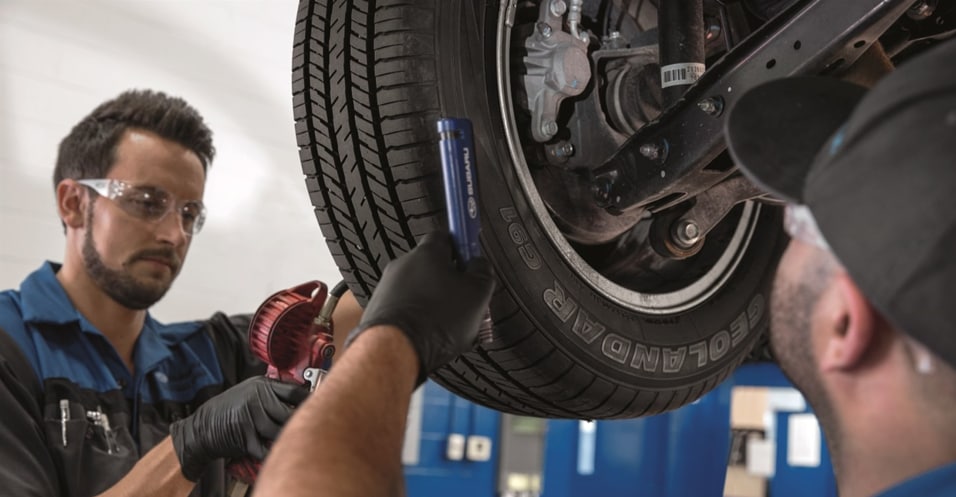
Average winter temperatures in Great Falls hover around 20°F, and the first measurable snow often shows up in October. We tell customers the same thing every fall: get ahead of it now. A proper Subaru tire rotation Great Falls MT drivers can count on, paired with an alignment check, is one of the simplest ways to avoid getting caught off guard when the roads turn icy. If you're due for service, you can schedule with our service center before the first hard freeze hits.
Why Great Falls Drivers Should Prep Their Subaru Tires Before Winter
December in Great Falls averages about 9.6 inches of snow across roughly seven snowy days, and the city picks up somewhere between 58 and 63 inches over a typical year. Snow usually starts in October and can linger into May, so the stretch where your tires really matter runs more than half the year.
Cold temperatures sap tire pressure, road salt and gravel wear down tread faster, and freeze-thaw cycles chew up pavement in ways that throw off alignment. Getting ahead of these issues before the first snowfall means fewer surprises when you actually need traction most.
Tire Rotation: Protecting Your Subaru's Symmetrical AWD System
Subaru's Symmetrical AWD sends power to all four wheels through a linked drivetrain design, and that setup depends on all four tires staying in consistent condition. That design is why tire rotation matters more on a Subaru than on a typical front-wheel-drive car. When tires wear unevenly, their circumference changes slightly, and that mismatch can create real problems.
Why AWD Models Like the Outback and Forester Need Regular Rotation
Because power routes to all four wheels simultaneously, models like the Outback and Forester rely on tires that rotate at nearly identical speeds. Mismatched tire circumference from uneven wear can cause mechanical damage to the AWD system itself, not just a rougher ride. Regular rotation redistributes wear across all four tires, keeping their diameters close enough to protect the drivetrain and keep handling predictable on slick roads.
Signs of Uneven Wear and What They Mean
Bald patches, cupping, or wear concentrated on one edge of a tire are red flags. Cupping or wear along the inner edge often points to alignment or suspension trouble rather than a rotation problem alone. Bulges and cracks signal tire damage that needs attention regardless of tread depth. Catching these signs early during a routine inspection can save you from a bigger repair, and it's one of the reasons our technicians check tread patterns closely at every visit.
Rotation Intervals Vary by Model and Driving Habits
There's no single right interval. Published recommendations land anywhere from 5,000 to 8,000 miles, and many owners simply pair rotation with every oil change. What's right for your Subaru depends on your model, your tires, and how you drive, so check your owner's manual, your MySubaru account, or Subaru's Maintenance Schedule Lookup tool. Driving mostly gravel roads around Belt or Ulm will wear tires differently than commuting on pavement inside Great Falls.
| Model | Drivetrain | What Affects Your Interval | Notable Winter Consideration |
|---|---|---|---|
| Outback | Symmetrical AWD | Highway miles wear more evenly than gravel commutes | Higher ground clearance helps on snow-packed rural roads |
| Forester | Symmetrical AWD | Frequent gravel driving shortens the interval | Popular for gravel and mixed-terrain commutes |
| Crosstrek | Symmetrical AWD | Stop-and-go city driving loads front tires harder | Compact size handles well on icy city streets |
| Ascent | Symmetrical AWD | Heavier vehicle and towing accelerate wear | Added weight can affect tread wear patterns |
| Impreza | Symmetrical AWD or FWD | FWD models wear front tires faster | FWD trims need extra attention to front tire wear |
Tread Depth and Tire Pressure Checks for Montana Winters
Tread depth and pressure are the two numbers that matter most once temperatures drop. Both change with the seasons, and both directly affect how your Subaru handles ice, slush, and packed snow around Great Falls.
Reading Tread Depth Before the First Snow
NHTSA considers tires unsafe once tread wears below 2/32 of an inch, checked with the classic penny test: if you can see the top of Lincoln's head, it's time to replace. For winter traction specifically, tire retailers commonly cite 6/32 of an inch as the minimum safe depth, a full 4/32 higher than the legal minimum, because snow and slush need deeper grooves to channel away. Checking tread monthly with a gauge or the built-in wear indicators takes a couple of minutes and can prevent a slide on an icy corner.
Why Cold Temperatures Affect Tire Pressure
Every 10-degree drop in temperature can lower tire pressure by 1 to 2 PSI, so a 20-degree swing, common overnight in Great Falls, could mean losing up to 4 PSI without a single mile driven. NHTSA recommends checking cold tire pressure monthly, with the car parked for at least three hours, and matching it to the number on your driver's door label rather than guessing. Underinflated tires reduce grip and lengthen stopping distances on wet or icy pavement, exactly the situation you want to avoid on Montana roads.
Highway Trips and Long-Distance Winter Driving
A run to Helena or Billings puts different demands on tires than errands around town. Sustained highway speeds build heat, which is why correct pressure matters most on long drives, and a tire that's marginal on tread will feel fine at 35 mph and unsettled at 75. If you're planning highway trips this winter, check pressure the morning you leave rather than relying on a reading from two weeks ago.
Alignment and Balancing: The Overlooked Winter Essentials
Rotation and tread checks get most of the attention, but alignment and balancing quietly affect how safely your Subaru handles winter roads. NHTSA links proper balancing and alignment performed by a qualified technician to overall tire safety, and Great Falls' road conditions make both easy to knock out of spec.
How Potholes and Gravel Roads Cause Alignment Issues
Hitting a pothole or driving stretches of gravel on the way to Vaughn or Choteau can shift alignment angles like camber, caster, and toe. These shifts stress steering and suspension components, and over time they translate into uneven tire wear. Freeze-thaw cycles make Great Falls streets particularly prone to potholes each spring, so a post-winter alignment check is worth adding to your routine.
Signs You Need an Alignment or Balance
Pulling to one side, a steering wheel that sits off-center while driving straight, uneven tread wear, loose-feeling steering, vibration at speed, or squealing through turns are all signals worth taking seriously. Our Subaru Tire Center handles inspection, balancing, and alignment corrections, and balancing itself involves adding small weights to the rim to correct uneven weight distribution around the tire and wheel assembly.
Winter Tires vs. Sticking With All-Seasons
Whether to switch is worth discussing with a technician rather than deciding on your own, since driving habits and routes vary so much across our service area.
Winter Tires vs. All-Season Tires on Montana Roads
Michelin builds winter tires for conditions at or below 45°F, using rubber compounds that stay flexible when all-season rubber stiffens up. Michelin also recommends winter tires on all four wheels even on AWD vehicles, since AWD helps with acceleration but doesn't improve braking or cornering grip on ice. Bridgestone's winter tires use a multi-cell compound designed to clear the thin water layer that forms on ice, which helps traction during Great Falls' snowiest stretch, roughly November through March. Look for the 3PMSF (Three-Peak Mountain Snowflake) symbol for official winter certification. An M+S marking on all-season tires doesn't mean they're winter-certified, and plenty of drivers assume otherwise.
The practical trigger is temperature, not snowfall. Once daily highs settle at or below 45°F, winter rubber starts outperforming all-seasons even on dry pavement. In Great Falls that usually means booking the swap in October rather than waiting for the first storm, when appointment slots fill fast.
When Tire Replacement Becomes Necessary
When one tire needs replacing, shops typically recommend replacing all four together to avoid unbalanced wear across the drivetrain. A lower-cost alternative is shaving a single new tire to match the tread depth of the other three. Either way, matching brand, model, size, speed rating, and load index across all four tires is required to keep Symmetrical AWD working as intended.
What to Expect During a Subaru Tire Service Appointment
A typical visit starts with a diagnostic scan and multi-point inspection, followed by tread and pressure checks on all four tires. From there, our technicians perform rotation, balancing, or alignment as needed, using genuine OEM parts throughout. If a technician spots a small puncture, it can often be patched rather than requiring a full replacement, which saves you money when the damage is minor. Diagnostic tools also help pinpoint the actual cause of wear or damage, whether that's alignment, inflation, or road conditions, rather than just treating the symptom.
Additional Winter Readiness Checks
Since your Subaru is already on the lift, it makes sense to bundle in other seasonal checks during the same visit. We commonly review battery health, wiper blade condition, and fluid levels alongside oil changes, brake inspections, and cooling system checks. Handling these together in one appointment saves a return trip and gets your whole vehicle, not just the tires, ready for Montana winter driving.
Get Winter-Ready at the Great Falls Subaru Tire Center
Whether you need a straightforward Subaru tire rotation Great Falls MT drivers rely on every few thousand miles, or a full alignment after a rough winter of potholes, our team at 800 Central Ave is set up to handle it. We serve drivers throughout Great Falls along with Black Eagle, Belt, Ulm, and Vaughn, and customers regularly travel in from Havre, Choteau, Lewistown, and Browning for factory-trained Subaru service. As a Subaru dealership with factory-trained technicians, we bring the same expertise Subaru builds into these vehicles right to the shop floor, rather than treating your AWD system like any other car on a generic tire shop's rack.
Schedule Service Online or Check Current Tire Specials
Ready to get your Subaru winter-ready? Check our current service and tire specials first, then book an appointment at our service center or visit our Subaru ire Center for inspection, repair, and balancing details. Our service department is open Monday through Friday from 7:30 AM to 5:30 PM and Saturdays from 8 AM to 12 PM, and you can reach us directly at (406) 998-6198 with any questions before the snow starts flying.
Frequently Asked Questions
How often should you rotate tires on a Subaru? Most recommendations land between 5,000 and 8,000 miles, and many owners simply rotate at every oil change. Your specific interval depends on your model, tires, and driving conditions, and it's listed in your owner's manual or MySubaru account.
Do you need an alignment every time you rotate tires? Not necessarily. Alignment is typically checked when you notice pulling, uneven wear, or after hitting a pothole, while rotation follows a mileage-based schedule.
Can a small tire puncture be repaired instead of replaced? Often, yes. Our technicians assess the location and size of the puncture and can patch it in many cases rather than requiring a new tire.
When should I switch to winter tires in Great Falls? Temperature is the trigger, not snowfall. Winter tire compounds start outperforming all-seasons once daily highs sit at or below 45°F, which in Great Falls usually means October rather than waiting for the first storm. Booking early also means better appointment availability before the seasonal rush.
Do I still need winter tires if my Subaru has AWD? AWD helps you get moving, but it doesn't improve braking or cornering grip on ice. Michelin recommends winter tires on all four wheels even on AWD vehicles, and our technicians can talk through whether your routes and driving habits justify the switch.