
Central Montana doesn't ease into winter. One week you're driving with the windows down, and the next you're scraping frost off the windshield before sunrise. Getting your Subaru ready for Montana winter takes more than tossing an ice scraper in the trunk. You need to check the systems that keep your vehicle reliable once temperatures drop and roads turn slick. Our team at the Great Falls Subaru service center walks through this process with customers every fall, and this guide covers what we look for.
Why Montana Winters Demand Subaru-Specific Preparation
Great Falls winters run cold and stay cold. December through February averages 19.8°F to 31.6°F, with January's high barely climbing past 32°F. The region also sees around 58 inches of snow annually, and while daily highs and lows swing widely across the year, hard drops below -8°F aren't common but they happen.
Those numbers translate into real risk on the road. Snowy and icy conditions substantially increase crash risk in Montana, and rural highways carry added danger because emergency response and cell coverage can be limited out there. Subaru's Symmetrical All-Wheel Drive sends power to all four wheels at all times, giving drivers more balanced handling and grip than a two-wheel-drive vehicle offers. That said, all-wheel drive won't save a vehicle running on bald tires or a dying battery. Preparing your Subaru for a Montana winter still starts with a vehicle that's mechanically ready for the cold.
Your Subaru Winter Inspection Checklist
A thorough winter check touches nearly every system in the vehicle. We break it into four areas that matter most once the temperature starts falling.
Tire Condition and Pressure
Tires are your only contact with the road, and cold air makes them work harder. As temperatures drop, tire pressure drops with them, so it's worth rechecking pressure the first time overnight lows dip sharply. Tread depth matters just as much. The legal minimum in the U.S. is 2/32 of an inch, but for real snow and ice traction, tread should stay at or above 6/32 of an inch, so we recommend planning to replace tires before they wear past that point.
We tell customers this often: once nightly lows are consistently running below about 45°F, it's time to evaluate whether your current tires can still handle the season. All-season tires stiffen up and lose flexibility in the cold, while winter-specific tires, like Bridgestone Blizzak or Michelin X-Ice, or anything carrying the 3PMSF rating, stay pliable and grip better on snow and ice. This is one of the most common questions we hear from Subaru winter preparation customers, and the honest answer is that a dedicated winter tire outperforms an all-season tire in true Montana conditions.
If you're weighing your options, ask our team during a visit to our service center which tire fits your driving habits, or schedule service online to have it inspected.
Battery Health and Cold-Weather Performance
Cold weather is hard on batteries. Engines need roughly 30% more energy to start when it's freezing outside, and at 0°F a battery delivers only about 50% of its rated capacity, according to AAA. That gap matters, and it's why a battery that seemed fine in October can fail on the first hard freeze of December.
Cold Cranking Amps, or CCA, measure how much amperage a battery can deliver at 0°F for 30 seconds while staying above 7.2 volts. That number tells you whether a battery is built for Montana winters. During a winter check, we look over the casing for cracks or leaks, inspect the terminals for corrosion, and make sure the battery is mounted securely. Average battery life runs three to five years according to AAA, so we recommend annual checks once a battery starts approaching that age range.
Engine Oil and Coolant Levels
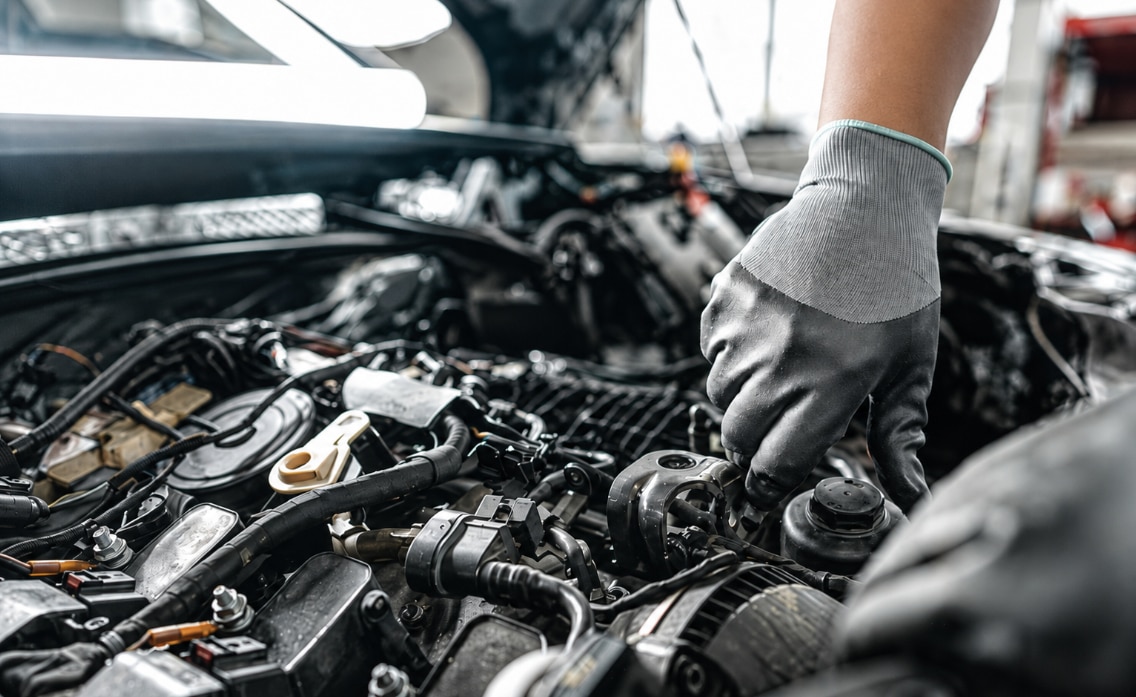
Oil that's too thick for cold weather makes for a harder start, which puts extra strain on the engine right when it's already fighting the cold. Using the correct viscosity grade for winter conditions helps the engine turn over smoothly on frigid mornings. Coolant matters too. The antifreeze-to-water ratio needs to stay correct to prevent freezing in the system.
Oil-change intervals and fluid specifications vary by model and engine, so we won't give a blanket number here. Your owner's manual, the MySubaru app, or a quick conversation with one of our service advisors will give you the exact interval for your specific Subaru.
Brakes, Wiper Blades, and Exterior Lights
Braking early and gradually helps you avoid skidding on snow-packed roads, and every Subaru comes equipped with 4-wheel ABS to assist with stopping on slippery surfaces, according to Subaru. Still, ABS works best when the brake system itself is in good shape, so pads, rotors, and fluid all get checked as part of any winter inspection.
Worn wiper blades smear more than they clear, so we suggest swapping in dedicated winter blades before the first snowfall. Exterior lights deserve equal attention, since shorter daylight hours mean you're relying on headlights, taillights, and brake lights more often.
Montana DOT recommends checking the cooling system, heater, defroster and wipers, fuel system, oil level, battery and ignition system, lights, exhaust system, tires, and brakes before winter sets in, and that list lines up closely with what we check during a service appointment.
Heater and Defroster Performance Checks
A weak heater or a defroster that struggles to clear the windshield leaves you driving half-blind on a frosty morning. Test both systems before the season starts rather than waiting for the first cold morning to find out something's wrong. Weak airflow or insufficient heat output are early warning signs worth addressing right away.
If your Subaru is equipped with MySubaru's Remote Engine Start with Climate Control, you can warm the cabin and clear frost before you even step outside. That alone makes a difference on a January morning in Great Falls.
Why Winter Prep Needs Vary by Model and Driving Habits
Every Subaru needs its own winter treatment. A Forester used mostly for highway commuting wears differently than an Outback that spends weekends on gravel roads or mountain passes. Maintenance intervals differ by model, mileage, vehicle age, and how the vehicle is driven, and those specifics live in your owner's manual or the MySubaru app rather than in a generic checklist. Sticking to the recommended intervals for your specific model also keeps your warranty valid, one more reason to work with a service advisor who knows Subaru's guidelines rather than guessing.
This is also where X-MODE comes into play for Forester, Outback, and Crosstrek drivers facing steep or uneven terrain. X-MODE works alongside Symmetrical All-Wheel Drive, adjusting throttle response and transmission behavior while sending torque to individual wheels for better grip in slippery or uneven conditions. It's a mechanical adjustment that changes how the vehicle responds when you need traction most, not a marketing buzzword. Outback and Forester winter driving both benefit from this system, though drivers still need to adjust speed and following distance no matter how capable the vehicle is.
Safe Winter-Driving Habits for Central Montana Roads
Good mechanical prep only goes so far without good habits behind the wheel. These are general best practices, not professional driving instruction, but they matter every time you head out in a Subaru winter.
Clearing Snow and Ice Before You Drive
Clear snow and ice from the hood, roof, and rear window before you drive, not just the windshield. Snow left on the roof can slide down and block your view mid-drive, or fly off and obstruct the driver behind you. Clean your headlights too, since a layer of grime or snow cuts down on visibility more than most drivers realize.
Even with AWD engaged, it pays to check the forecast first. If conditions look dangerous, rescheduling travel is often the smarter call. Montana DOT's 511 system offers road conditions and webcams that are worth checking before you head out, especially for longer drives across Central Montana.
Posted speed limits assume dry pavement, so slow down and increase following distance on snow or ice. Montana law also requires drivers to slow down and move over for emergency vehicles and snowplows, which show up often on rural highways during storm season.
Packing a Montana Winter Emergency Kit
Montana DOT's Disaster and Emergency Survival Guide lists what belongs in every vehicle during the winter months. Keep this list handy, print it, or save it to your phone:
-
NOAA weather radio and extra batteries.
-
Flashlight and a first-aid kit.
-
Blankets and season-appropriate clothing.
-
Whistle, dust mask, and moist towelettes.
-
Garbage bags and ties.
-
Basic tool kit, knife, shovel, and axe or saw.
-
Tow chain or straps and a spare tire.
-
Wire, rope, and starter fluid.
-
Extra oil and deicer.
-
Flares and kitty litter or sand for traction.
-
Jumper cables and drinking water.
-
Non-perishable, high-energy food and local maps.
If you do get stranded, run the engine intermittently for heat, keep the exhaust pipe clear of snow, and stay with the vehicle for shelter. If your Subaru has MySubaru Connected Services, you can use it to reach roadside assistance directly from the app.
Schedule Your Winter Preparation Service at Great Falls Subaru
Getting your Subaru ready for winter shouldn't be a guessing game.
-
Our factory-trained technicians know exactly what each model needs.
-
We use genuine Subaru parts on every job, which keeps your vehicle running the way it was built to run.
-
Scheduling is simple, and we make it easy to fit a visit into your week before the snow starts piling up.
Ready to Get Started?
If you're ready to prepare your Subaru for Montana winter, schedule a winter-preparation appointment online and let our team handle the details before the first big storm rolls into Great Falls.
Categories:
Service